

























TAGRISSO is a once-daily prescription pill used to treat adults with non-small cell lung cancer (NSCLC) that has certain abnormal EGFR gene(s)*:

  • as a first treatment when lung cancer has spread to other parts of the body (metastatic)
  • in combination with pemetrexed and platinum-based chemotherapy, as your first treatment when your lung cancer has spread to nearby tissues (locally advanced) or to other parts of the body (metastatic)

TAGRISSO is a targeted therapy. Targeted therapies are not the same as immunotherapy.

*For tumors with EGFR exon 19 deletions or exon 21 L858R mutations. EGFR is epidermal growth factor receptor.

Locally advanced patients who are not eligible for curative surgery or radiation.

TAGRISSO can be taken alone or as combination therapy.

Explore the trial results.

Clinical Trial Results: TAGRISSO + Chemotherapy

TAGRISSO combination therapy may give you more time without your cancer growing or spreading and may help you live longer.

TAGRISSO is a targeted therapy that works differently than immunotherapy or standard chemotherapy.

2+years

without EGFR+ NSCLC growing or spreading

Median progression-free survival was

26months

for adults taking TAGRISSO + chemotherapy (pemetrexed and platinum-based chemotherapy)

Versus Icon

17 months

for adults taking TAGRISSO alone

Median progression-free survival measures the amount of time that half of the people enrolled in the study were on treatment before their cancer started growing or spreading. In the clinical trial, half the adults who took TAGRISSO + chemotherapy (pemetrexed and platinum-based chemotherapy) lived at least 25.5 months without their cancer growing or spreading and half the adults who took TAGRISSO alone lived at least 16.7 months without their cancer growing or spreading.

Half of adults lived

4years

Arrow Logo

The clinical trial included 557 adults with previously untreated locally advanced or metastatic EGFR+ NSCLC. They were given either TAGRISSO alone or TAGRISSO + chemotherapy (pemetrexed and platinum-based chemotherapy).

In the clinical trial, there were 2 parts of treatment with TAGRISSO + chemotherapy (pemetrexed and platinum-based chemotherapy). For the first 3 months, people took 1 TAGRISSO tablet (80 mg) every day and received 2 chemotherapy treatments together (pemetrexed and platinum-based chemotherapy) every 3 weeks (4 cycles). For the rest of the treatment, people continued to take 1 TAGRISSO tablet (80 mg) every day and received only 1 chemotherapy treatment (pemetrexed) every 3 weeks.

Patients continued treatment with TAGRISSO alone or TAGRISSO + chemotherapy until their doctor told them to stop.

The main goal of the clinical trial was to measure the time adults were on treatment before
their cancer started growing or spreading. This is called progression-free survival (PFS). For
adults taking TAGRISSO with chemotherapy, it took significantly longer for their cancer to grow or spread than it did for those taking TAGRISSO alone.

The secondary goal of the clinical trial was to measure how long adults in the study lived. This is called overall survival (OS). Adults taking TAGRISSO + chemotherapy lived significantly longer than those taking TAGRISSO alone.

Clinical Trial Results: TAGRISSO Alone

TAGRISSO alone may help you live longer.

TAGRISSO is a targeted therapy that works differently than immunotherapy or standard chemotherapy.

Half of the adults
who took TAGRISSO alone lived for more than

3years

Median overall
survival was

39months

for adults taking TAGRISSO alone

Versus Icon

32months

months for adults taking erlotinib or gefitinib

Median overall survival is the length of time that half of the people who are enrolled in the study are still living. In the clinical trial, half the adults who took TAGRISSO alone lived at least 38.6 months and half the adults who took erlotinib or gefitinib lived at least 31.8 months.

Median progression-free survival was

19months

for adults taking
TAGRISSO alone

Versus Icon

10months

for adults taking
erlotinib or gefitinib

Median progression-free survival measures the amount of time that half of the people enrolled in the study were on treatment before their cancer started growing or spreading. In the clinical trial, half the adults who took TAGRISSO alone lived at least 18.9 months without their cancer growing or spreading and half the adults who took erlotinib or gefitinib lived at least 10.2 months without their cancer growing or spreading.

More time without

EGFR+ NSCLC growing or spreading

  • TAGRISSO may not work for everyone. Individual results may vary.

TAGRISSO may not work for everyone. Individual results may vary.

Median is the middle number in a group of numbers arranged from lowest to highest.

Arrow Logo

The clinical trial included 556 adults with previously untreated stage 4 (metastatic) EGFR+ NSCLC. The adults in the trial were given treatment with an oral EGFR tyrosine kinase inhibitor (TKI), a type of targeted therapy. Some adults were given either erlotinib or gefitinib, while other adults were given TAGRISSO alone.

The main goal of the clinical trial was to measure the time adults were on treatment before their cancer started growing or spreading. This is called progression-free survival (PFS). For adults taking TAGRISSO alone, it took significantly longer for their cancer to grow or spread than it did for those taking erlotinib or gefitinib.

The secondary goal of the clinical trial was to measure how long adults in the study lived. This is called overall survival (OS). Adults taking TAGRISSO alone lived significantly longer than those taking erlotinib or gefitinib.


Nearly 8 in
10 adults
responded to treatment with TAGRISSO alone

Of the people who responded to TAGRISSO alone:

  • 75% (209 of 279) of people achieved a partial response with TAGRISSO and 68% (188 of 277) of people with erlotinib/gefitinib. A partial response means the tumor shrank by at least 30%
  • 2% (6 of 279) of people achieved a complete response with TAGRISSO and 1% (3 of 277) of people with erlotinib/gefitinib. A complete response means the tumor could not be seen on imaging tests

These study results were based on an exploratory analysis, which was not intended to compare the two treatments.

Learn more about how to take TAGRISSO

Dosing Information

How to take TAGRISSO alone

Dosing that may conveniently fit into your daily routine

Tablet Icon

once-a-day pill
(80-mg tablet)

Spoon and Fork Icon

may be taken with or without food, and can be taken at home

House icon

may be taken at home

TAGRISSO, when given alone, should be taken every day for as long as your doctor tells you to take it.

If you miss a dose of TAGRISSO, do not make up the missed dose. Take your next dose at your regular time.

If your doctor prescribes TAGRISSO + chemotherapy:

TAGRISSO

Tablet Icon

once-a-day pill (80-mg tablet)

Spoon and Fork Icon

may be taken with or without food, and can be taken at home

TAGRISSO should be taken every day for as long as your doctor tells you to take it.

Plus Icon

Chemotherapy

Blood Bag Icon

chemotherapy infusions as prescribed

Your doctor will talk with you about your chemotherapy treatment schedule.

You and your doctor will work together to determine which treatment schedule for chemotherapy is right for you.

TAGRISSO + chemotherapy should be taken as prescribed by your doctor
Follow your treatment plan as prescribed by your doctor

What if I miss a dose of TAGRISSO?

Calendar and Clock Icon

What if I miss a dose of TAGRISSO?

If you miss a dose of TAGRISSO, do not make up for the missed dose. Take your next dose at your regular time.

Your doctor may change your dose, temporarily stop, or permanently stop treatment with TAGRISSO if you have side effects.

It’s important to follow your doctor’s instructions for staying on track with your treatment. Always take TAGRISSO exactly as directed by your doctor.

“Inspirational patient quote to come”

—Name X.

What if I’m having trouble swallowing TAGRISSO whole?

Glass Icon

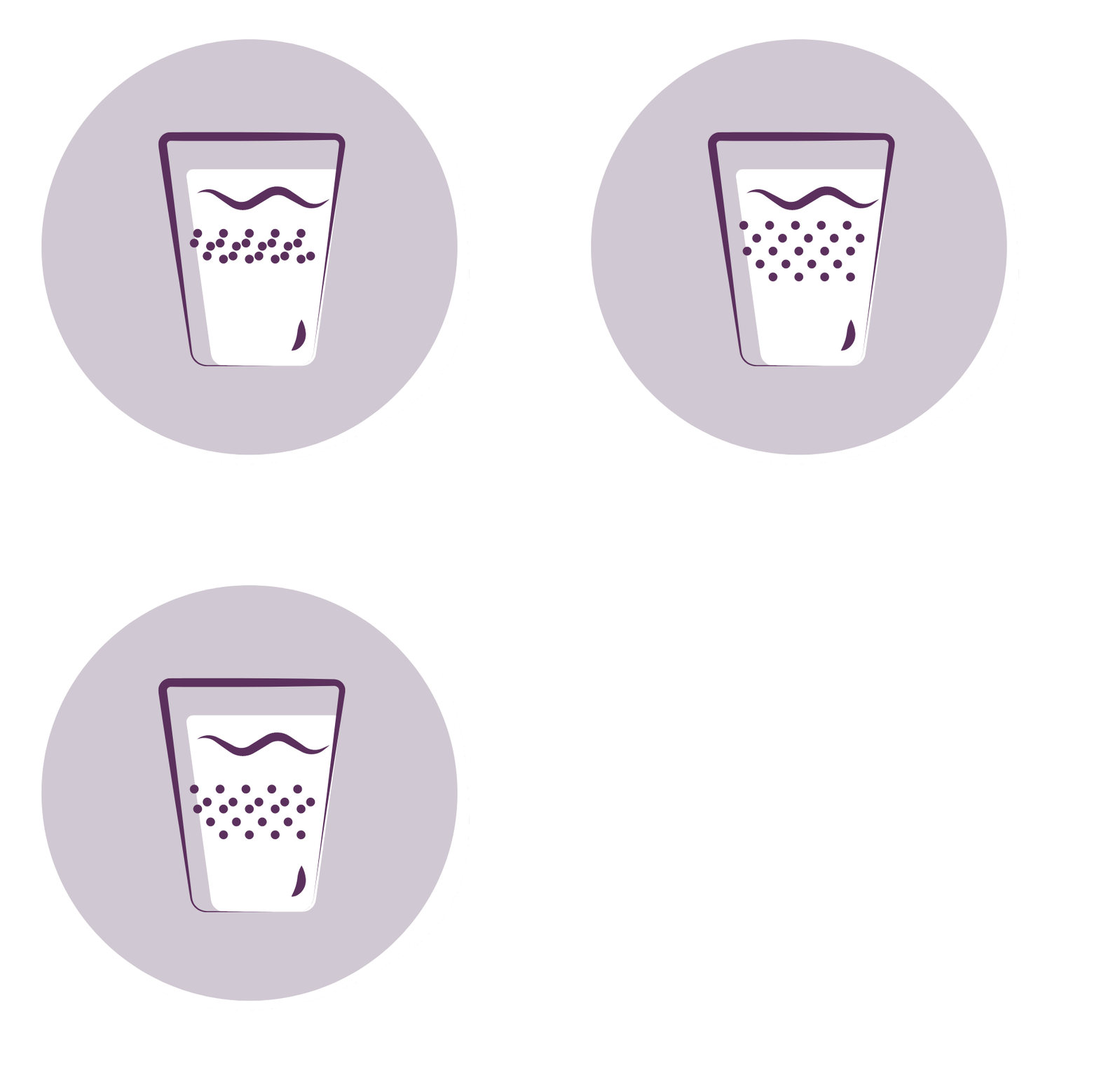
Place your TAGRISSO pill in a glass or container. Pour in 2 ounces (approximately 60 mL) of water. Don’t use carbonated water or other liquids

Man Drinking Water Icon

Drink the mixture right away

Glass with Small Pieces of Pills Icon

Stir until the pill is in small pieces. The pill will not completely dissolve. Do not crush, heat, or use ultrasound on the pill

Pitcher and Glass of Water

Add 4 to 8 more ounces (approximately 120 mL to 240 mL) of water to the glass or container, and drink it to make sure you take your full dose of TAGRISSO

Take TAGRISSO once a day, every day, as prescribed by your doctor

Safety Considerations

You may experience side effects with TAGRISSO

It's important to talk to your healthcare team right away if you experience side effects. Your doctor may change your dose, temporarily stop, or permanently stop treatment with TAGRISSO if you have side effects.

TAGRISSO may cause serious side effects, including:

  • Lung problems. TAGRISSO may cause severe lung problems that may lead to death. Symptoms may be similar to those symptoms from lung cancer. Tell your healthcare provider right away if you have any new or worsening lung symptoms, including trouble breathing, shortness of breath, cough, or fever
  • Heart problems, including heart failure. TAGRISSO may cause heart problems that may lead to death. Your healthcare provider should check your heart function before you start taking TAGRISSO and during treatment as needed. Tell your healthcare provider right away if you have any of the following signs and symptoms of a heart problem: feeling like your heart is pounding or racing, shortness of breath, swelling of your ankles and feet, dizziness, feeling lightheaded, or feeling faint
  • Eye problems. TAGRISSO may cause eye problems. Tell your healthcare provider right away if you have symptoms of eye problems which may include watery eyes, sensitivity to light, eye pain, eye redness, or vision changes. Your healthcare provider may send you to see an eye specialist (ophthalmologist) if you get eye problems with TAGRISSO
  • Skin problems. TAGRISSO may cause skin problems. Tell your healthcare provider right away if you develop skin reactions that look like rings (target lesions), severe blistering or peeling of the skin
  • Inflammation of the blood vessels in your skin. TAGRISSO may cause blood vessel problems in your skin. Tell your healthcare provider right away if you develop purple spots or redness of the skin that does not fade in color when pressed (non-blanching) on your lower arms, lower legs, or buttocks or large hives on the main part of your body (trunk) that do not go away within 24 hours and look bruised
  • Blood and bone marrow problems. TAGRISSO may cause a condition where your bone marrow cannot make enough new blood cells (aplastic anemia), and which may lead to death. Your healthcare provider will monitor your blood cell counts before you start and during treatment with TAGRISSO. Tell your healthcare provider right away if you develop any signs and symptoms of blood and bone marrow problems, including a new fever or fever that does not go away (100.4 °F), easy bruising or bleeding that will not stop, unusually pale skin, infection, tiredness, or weakness

Before taking TAGRISSO, tell your healthcare provider about all of your medical conditions, including if you:

  • have lung or breathing problems other than your lung cancer
  • have heart problems, including a condition called long QTc syndrome
  • have problems with your electrolytes, such as sodium, potassium, calcium or magnesium
  • have a history of eye problems
  • are pregnant or plan to become pregnant. TAGRISSO can harm your unborn baby. Tell your healthcare provider right away if you become pregnant during treatment with TAGRISSO or think you may be pregnant
  • Females who are able to become pregnant should have a pregnancy test before starting treatment with TAGRISSO. You should use effective birth control (contraception) during treatment with TAGRISSO and for 6 weeks after the last dose of TAGRISSO
  • Males who have female partners that are able to become pregnant should use effective birth control during treatment with TAGRISSO and for 4 months after the last dose of TAGRISSO
  • females who are breastfeeding or plan to breastfeed. It is not known if TAGRISSO passes into your breast milk. Do not breastfeed during treatment with TAGRISSO and for 2 weeks after your last dose of TAGRISSO. Talk to your healthcare provider about the best way to feed your baby during this time

Tell your healthcare provider about all the medicines you take, including prescription and over-the-counter medicines, vitamins, or herbal supplements. Especially tell your healthcare provider if you take a heart or blood pressure medicine

The most common side effects of TAGRISSO when given alone include:

  • low white blood cell counts
  • low platelet counts
  • low red blood cell counts (anemia)
  • diarrhea
  • rash
  • muscle, bone, or joint pain
  • changes in your nails, including: redness, tenderness, pain, inflammation, brittleness, separation from the nailbed, and shedding of nail
  • dry skin
  • mouth sores
  • tiredness
  • low white blood cell counts
  • low platelet counts
  • low red blood cell counts (anemia)
  • diarrhea
  • rash
  • muscle, bone, or joint pain
  • changes in your nails, including: redness, tenderness, pain, inflammation, brittleness, separation from the nailbed, and shedding of nail
  • dry skin
  • mouth sores
  • tiredness

The most common side effects of TAGRISSO when given alone after treatment with platinum-based chemotherapy and radiation treatment include:

  • low white blood cell counts
  • lung problems
  • low platelet counts
  • rash
  • diarrhea
  • changes in your nails, including: redness, tenderness, pain, inflammation, brittleness, separation from the nailbed, and shedding of nail
  • cough
  • COVID-19
  • low white blood cell counts
  • lung problems
  • low platelet counts
  • rash
  • diarrhea
  • changes in your nails, including: redness, tenderness, pain, inflammation, brittleness, separation from the nailbed, and shedding of nail
  • cough
  • COVID-19

The most common side effects of TAGRISSO in combination with pemetrexed and platinum-based chemotherapy include:

  • low white blood cell counts
  • low platelet counts
  • rash
  • diarrhea
  • mouth sores
  • changes in your nails, including: redness, tenderness, pain, inflammation, brittleness, separation from the nailbed, and shedding of nail
  • dry skin
  • increase of a substance in the blood called creatinine
  • low white blood cell counts
  • low platelet counts
  • rash
  • diarrhea
  • mouth sores
  • changes in your nails, including: redness, tenderness, pain, inflammation, brittleness, separation from the nailbed, and shedding of nail
  • dry skin
  • increase of a substance in the blood called creatinine

Tell your healthcare provider if you have any side effect that bothers you or that does not go away.

These are not all the possible side effects of TAGRISSO. For more information, ask your healthcare provider or pharmacist.

What is TAGRISSO?

TAGRISSO is a prescription medicine used to treat adults with non-small cell lung cancer (NSCLC) that has certain abnormal epidermal growth factor receptor (EGFR) gene(s):

  • to help prevent your lung cancer from coming back after your tumor(s) has been removed by surgery, or
  • when your lung cancer has spread to nearby tissues (locally advanced) that is unable to be removed (unresectable) by surgery and has responded or stabilized following chemotherapy and radiation treatment, or
  • as your first treatment when your lung cancer has spread to other parts of the body (metastatic), or
  • in combination with pemetrexed and platinum-based chemotherapy, as your first treatment when your lung cancer has spread to nearby tissues (locally advanced) or to other parts of the body (metastatic), or
  • when your lung cancer has spread to other parts of the body (metastatic), and you have had previous treatment with an EGFR tyrosine kinase inhibitor (TKI) medicine that did not work or is no longer working.

Your healthcare provider will perform a test to make sure that TAGRISSO is right for you.
It is not known if TAGRISSO is safe and effective in children.

Please see complete Prescribing Information, including Patient Information for TAGRISSO.

Call your doctor for medical advice about side effects. You may report side effects to FDA at 1-800-FDA-1088.


  • Take TAGRISSO exactly as your healthcare provider tells you to take it
  • Your healthcare provider may change your dose, temporarily stop, or permanently stop treatment with TAGRISSO if you have side effects
  • Take TAGRISSO 1 time each day
  • You can take TAGRISSO with or without food
  • If you miss a dose of TAGRISSO, do not make up for the missed dose. Take your next dose at your regular time
  • If you cannot swallow TAGRISSO tablets whole:
    • place your dose of TAGRISSO in a container that contains 60 mL (2 ounces) of water. Do not use carbonated water or any other liquids
    • stir the TAGRISSO tablet and water until the TAGRISSO tablet is in small pieces (the tablet will not completely dissolve). Do not crush, heat, or use ultrasound to prepare the mixture
    • drink the TAGRISSO and water mixture right away
    • add 120 mL to 240 mL (4 to 8 ounces) of water into the container and drink to make sure that you take your full dose of TAGRISSO
  • If you have a nasogastric (NG) tube:
    • Follow the same instructions for mixing TAGRISSO tablets in a container that contains 15 mL of water. Do not use carbonated water or any other liquids
    • Stir the TAGRISSO tablets and water until the TAGRISSO tablets are in small pieces (the tablets will not completely dissolve). Do not crush, heat, or use ultrasound to prepare the mixture
    • Add another 15 mL of water into the container to make sure no pieces of TAGRISSO tablet remain
    • Give the TAGRISSO tablet and water mixture using the NG tube manufacturer instructions within 30 minutes
    • Add another 30 mL of water into the syringe and give the water and any remaining TAGRISSO through the NG tube to make sure that all of the medicine is given. Repeat this step until no pieces remain in the syringe. This will help to ensure that the full prescribed dose of the TAGRISSO is given


Be sure to revisit How to take TAGRISSO for more information

Adding chemotherapy to TAGRISSO may increase the risk of certain side effects

These are not all the possible side effects of TAGRISSO or TAGRISSO + chemotherapy. For more information, ask your healthcare provider or pharmacist.

Keep your healthcare team informed of all the side effects you may be feeling as they can change over time.

Your healthcare team can find out the cause of your side effects and adjust your TAGRISSO + chemotherapy or TAGRISSO-only treatment plan to help.

In the clinical trial of TAGRISSO + chemotherapy, side effects changed over time

Discuss Icon

How to discuss side effects
with your doctor 

  • Store TAGRISSO at room temperature between 68 °F and 77 °F (20 °C to 25 °C)
  • Safely throw away medicine that is out of date or that you no longer need
  • Keep TAGRISSO and all medicines out of the reach of children

General information about the safe and effective use of TAGRISSO.

  • Medicines are sometimes prescribed for purposes other than those listed in a Patient Information leaflet. Do not use TAGRISSO for a condition for which it was not prescribed. Do not give TAGRISSO to other people, even if they have the same symptoms you have. It may harm them. You can ask your healthcare provider or pharmacist for information about TAGRISSO that is written for a healthcare professional


  • Active ingredient: osimertinib
  • Inactive ingredients: mannitol, microcrystalline cellulose, low-substituted hydroxypropyl cellulose, and sodium stearyl fumarate. Tablet coating contains: polyvinyl alcohol, titanium dioxide, macrogol 3350, talc, ferric oxide yellow, ferric oxide red and ferric oxide black


Before your next office visit, see common questions regarding late-stage EGFR+ NSCLC and TAGRISSO

Support is available for patients who may need help accessing TAGRISSO

If you’ve been diagnosed with stage 4 (metastatic) EGFR+ NSCLC and are getting ready to start treatment with TAGRISSO alone, download our brochure.

If you’ve been diagnosed with locally advanced or metastatic EGFR+ NSCLC and are getting ready to start treatment with TAGRISSO + chemotherapy, download our brochure.

IMPORTANT SAFETY INFORMATION

TAGRISSO may cause serious side effects, including:

  • Lung problems. TAGRISSO may cause severe lung problems that may lead to death. Symptoms may be similar to those symptoms from lung cancer. Tell your healthcare provider right away if you have any new or worsening lung symptoms, including trouble breathing, shortness of breath, cough, or fever
  • Heart problems, including heart failure. TAGRISSO may cause heart problems that may lead to death. Your healthcare provider should check your heart function before you start taking TAGRISSO and during treatment as needed. Tell your healthcare provider right away if you have any of the following signs and symptoms of a heart problem: feeling like your heart is pounding or racing, shortness of breath, swelling of your ankles and feet, dizziness, feeling lightheaded, or feeling faint
  • Eye problems. TAGRISSO may cause eye problems. Tell your healthcare provider right away if you have symptoms of eye problems which may include watery eyes, sensitivity to light, eye pain, eye redness, or vision changes. Your healthcare provider may send you to see an eye specialist (ophthalmologist) if you get eye problems with TAGRISSO
  • Skin problems. TAGRISSO may cause skin problems. Tell your healthcare provider right away if you develop skin reactions that look like rings (target lesions), severe blistering or peeling of the skin
  • Inflammation of the blood vessels in your skin. TAGRISSO may cause blood vessel problems in your skin. Tell your healthcare provider right away if you develop purple spots or redness of the skin that does not fade in color when pressed (non-blanching) on your lower arms, lower legs, or buttocks or large hives on the main part of your body (trunk) that do not go away within 24 hours and look bruised
  • Blood and bone marrow problems. TAGRISSO may cause a condition where your bone marrow cannot make enough new blood cells (aplastic anemia), and which may lead to death. Your healthcare provider will monitor your blood cell counts before you start and during treatment with TAGRISSO. Tell your healthcare provider right away if you develop any signs and symptoms of blood and bone marrow problems, including a new fever or fever that does not go away (100.4 °F), easy bruising or bleeding that will not stop, unusually pale skin, infection, tiredness, or weakness

Before taking TAGRISSO, tell your healthcare provider about all of your medical conditions, including if you:

  • have lung or breathing problems other than your lung cancer
  • have heart problems, including a condition called long QTc syndrome
  • have problems with your electrolytes, such as sodium, potassium, calcium or magnesium
  • have a history of eye problems
  • are pregnant or plan to become pregnant. TAGRISSO can harm your unborn baby. Tell your healthcare provider right away if you become pregnant during treatment with TAGRISSO or think you may be pregnant
  • Females who are able to become pregnant should have a pregnancy test before starting treatment with TAGRISSO. You should use effective birth control (contraception) during treatment with TAGRISSO and for 6 weeks after the last dose of TAGRISSO
  • Males who have female partners that are able to become pregnant should use effective birth control during treatment with TAGRISSO and for 4 months after the last dose of TAGRISSO
  • females who are breastfeeding or plan to breastfeed. It is not known if TAGRISSO passes into your breast milk. Do not breastfeed during treatment with TAGRISSO and for 2 weeks after your last dose of TAGRISSO. Talk to your healthcare provider about the best way to feed your baby during this time

Tell your healthcare provider about all the medicines you take, including prescription and over-the-counter medicines, vitamins, or herbal supplements. Especially tell your healthcare provider if you take a heart or blood pressure medicine

The most common side effects of TAGRISSO when given alone include:

  • low white blood cell counts
  • low platelet counts
  • low red blood cell counts (anemia)
  • diarrhea
  • rash
  • muscle, bone, or joint pain
  • changes in your nails, including: redness, tenderness, pain, inflammation, brittleness, separation from the nailbed, and shedding of nail
  • dry skin
  • mouth sores
  • tiredness
  • low white blood cell counts
  • low platelet counts
  • low red blood cell counts (anemia)
  • diarrhea
  • rash
  • muscle, bone, or joint pain
  • changes in your nails, including: redness, tenderness, pain, inflammation, brittleness, separation from the nailbed, and shedding of nail
  • dry skin
  • mouth sores
  • tiredness

The most common side effects of TAGRISSO when given alone after treatment with platinum-based chemotherapy and radiation treatment include:

  • low white blood cell counts
  • lung problems
  • low platelet counts
  • rash
  • diarrhea
  • changes in your nails, including: redness, tenderness, pain, inflammation, brittleness, separation from the nailbed, and shedding of nail
  • cough
  • COVID-19
  • low white blood cell counts
  • lung problems
  • low platelet counts
  • rash
  • diarrhea
  • changes in your nails, including: redness, tenderness, pain, inflammation, brittleness, separation from the nailbed, and shedding of nail
  • cough
  • COVID-19

The most common side effects of TAGRISSO in combination with pemetrexed and platinum-based chemotherapy include:

  • low white blood cell counts
  • low platelet counts
  • rash
  • diarrhea
  • mouth sores
  • changes in your nails, including: redness, tenderness, pain, inflammation, brittleness, separation from the nailbed, and shedding of nail
  • dry skin
  • increase of a substance in the blood called creatinine
  • low white blood cell counts
  • low platelet counts
  • rash
  • diarrhea
  • mouth sores
  • changes in your nails, including: redness, tenderness, pain, inflammation, brittleness, separation from the nailbed, and shedding of nail
  • dry skin
  • increase of a substance in the blood called creatinine

Tell your healthcare provider if you have any side effect that bothers you or that does not go away.

These are not all the possible side effects of TAGRISSO. For more information, ask your healthcare provider or pharmacist.

What is TAGRISSO?

TAGRISSO is a prescription medicine used to treat adults with non-small cell lung cancer (NSCLC) that has certain abnormal epidermal growth factor receptor (EGFR) gene(s):

  • to help prevent your lung cancer from coming back after your tumor(s) has been removed by surgery, or
  • when your lung cancer has spread to nearby tissues (locally advanced), that is unable to be removed (unresectable) by surgery and has responded or stabilized following chemotherapy and radiation treatment, or
  • as your first treatment when your lung cancer has spread to other parts of the body (metastatic), or
  • in combination with pemetrexed and platinum-based chemotherapy, as your first treatment when your lung cancer has spread to nearby tissues (locally advanced) or to other parts of the body (metastatic), or
  • when your lung cancer has spread to other parts of the body (metastatic) and you have had previous treatment with an EGFR tyrosine kinase inhibitor (TKI) medicine that did not work or is no longer working.

Your healthcare provider will perform a test to make sure that TAGRISSO is right for you.
It is not known if TAGRISSO is safe and effective in children.

Call your doctor for medical advice about side effects. You may report side effects to FDA at 1-800-FDA-1088.

EGFR is epidermal growth factor receptor; EGFR+ is epidermal growth factor receptor mutation-positive; NSCLC is non-small cell lung cancer.

EGFR+ is epidermal growth factor receptor mutation-positive; NSCLC is non-small cell lung cancer.

IMPORTANT SAFETY INFORMATION

see-more