













Understanding different
types of lung cancer

The two main types of lung cancer are non-small cell lung cancer (NSCLC) and small cell lung cancer (SCLC). They are named based on how the cancer cells look under the microscope.

Late-stage NSCLC includes:

  • NSCLC that has spread to nearby tissues around the lungs (locally advanced)
  • NSCLC that has spread to other parts of the body (metastatic)

*Locally advanced patients who are not eligible for curative surgery or radiotherapy.

  • About 80% to 85% of all lung cancer cases are NSCLC, making it the most common type of lung cancer

It’s important to know your NSCLC stage

Stage 1 NSCLC lung diagram

Click the bar to see the different stages

  • Stage 1

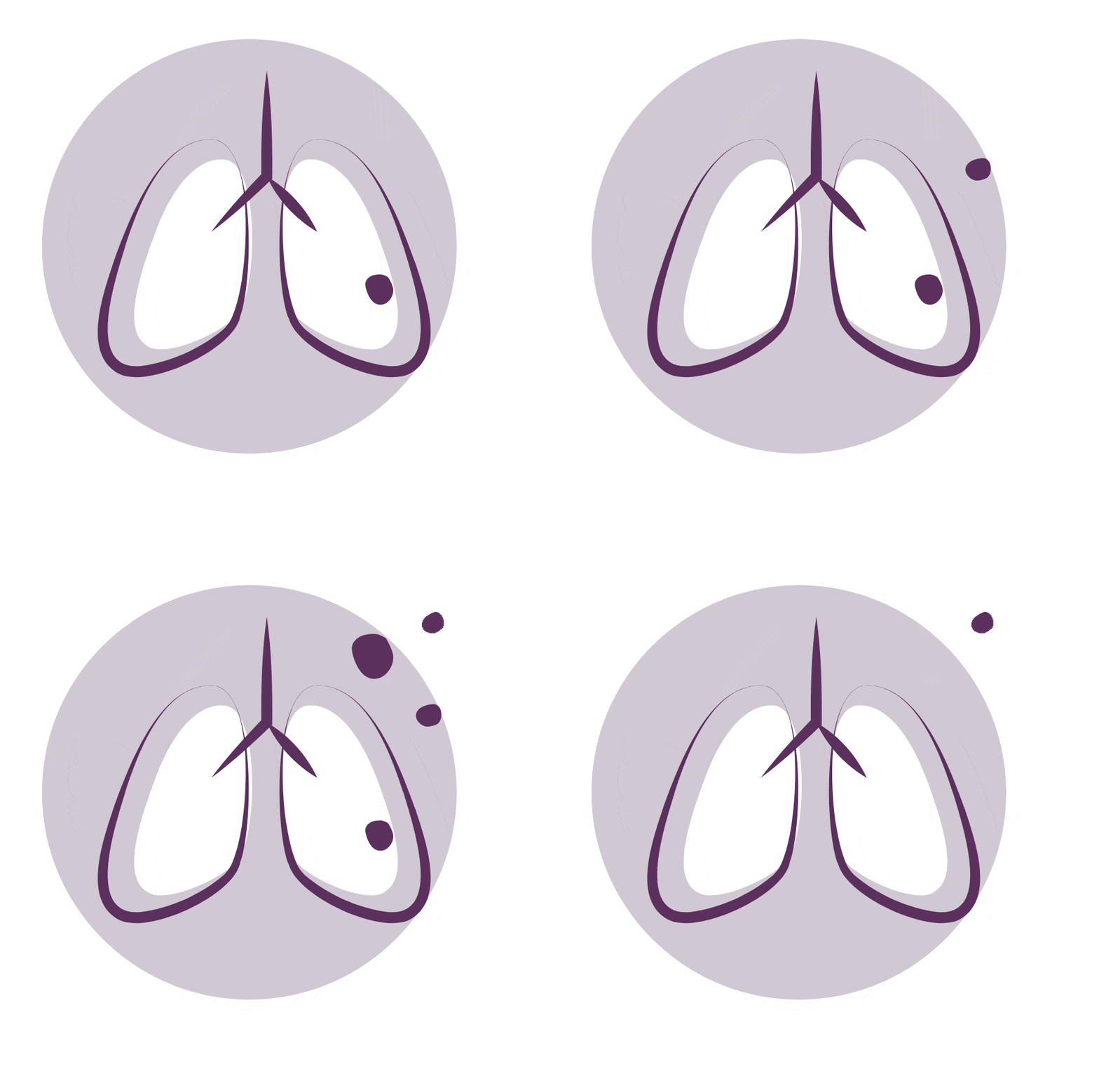
    Cancer is located only in the lungs and has not spread to any lymph nodes. The tumor is no larger than a few centimeters

  •  
  • Stage 2

    Cancer is in the lungs and may have spread to nearby lymph nodes on the same lung

  •  
  • Stage 3

    Cancer is in the lungs and may have spread to the tissues around the lungs or lymph nodes (locally advanced). There may now be separate tumors in the same lung where the cancer started

  •  
  • Stage 4

    Unlike the earlier stages of lung cancer, stage 4 lung cancer has spread to parts of the body beyond the lungs (metastatic). The tumors may be of any size and may or may not have spread to lymph nodes

Late-stage NSCLC includes:

  • NSCLC that has spread to nearby tissues around the lungs (locally advanced)*
  • NSCLC that has spread to other parts of the body (metastatic)

Your doctor will perform tests to determine your lung cancer stage. Please speak to your doctor to learn more about what your stage of lung cancer means for you.

*Locally advanced patients who are not eligible for curative surgery or radiotherapy.

  • Stage 1

    Cancer is located only in the lungs and has not spread to any lymph nodes. The tumor is no larger than a few centimeters

  •  
  • Stage 2

    Cancer is in the lungs and may have spread to nearby lymph nodes on the same lung

  •  
  • Stage 3

    Cancer is in the lungs and may have spread to the tissues around the lungs or lymph nodes (locally advanced). There may now be separate tumors in the same lung where the cancer started

  •  
  • Stage 4

    Unlike the earlier stages of lung cancer, stage 4 lung cancer has spread to parts of the body beyond the lungs (metastatic). The tumors may be of any size and may or may not have spread to lymph nodes

Late-stage NSCLC includes:

  • NSCLC that has spread to nearby tissues around the lungs (locally advanced)*
  • NSCLC that has spread to other parts of the body (metastatic)

Your doctor will perform tests to determine your lung cancer stage. Please speak to your doctor to learn more about what your stage of lung cancer means for you.

*Locally advanced patients who are not eligible for curative surgery or radiotherapy.

In addition to staging, it’s important to learn about biomarkers and biomarker testing because not all lung cancers are the same

What is a “biomarker” test?

Biomarker testing can reveal mutations (sometimes called biomarkers) present in your type of lung cancer that may be causing your cancer to grow and spread. Testing for mutations is a way for your healthcare team to determine appropriate treatment options.

Biomarker testing can be done at the time of diagnosis or any time throughout your treatment journey.

Biomarker testing can reveal detailed information, including:

what may be causing your cancer to grow and spread

which types of treatment may be appropriate for your type of cancer

Biomarker testing may help find the right treatment options for you 

People with late-stage NSCLC may have a biomarker that could be targeted with therapy
 

There are many biomarkers that can be found in NSCLC, but some are more common than others.* Your doctor may recommend you be tested for mutations such as an EGFR mutation.

Certain types of biomarker testing are sometimes referred to as genomic testing, molecular testing, or mutation testing.

Finding out if you have a mutation, like an EGFR mutation, may help your doctor determine an appropriate treatment plan for your type of lung cancer.

*Not all biomarkers have approved treatment options in NSCLC.

What are the different ways
to get a biomarker test?

What are the different ways
to get a biomarker test?

Biomarker testing in late-stage NSCLC can be done in 2 ways:

  • A sample of your tumor can be tested. This is called a tissue biopsy
  • A sample of your blood can be tested. This is called a liquid biopsy

Biomarker testing in late-stage NSCLC can be done in 2 ways:

  • A sample of your tumor can be tested. This is called a tissue biopsy
  • A sample of your blood can be tested. This is called a liquid biopsy

Down arrow icon

A mutation in the epidermal growth factor receptor (EGFR) gene is a common and important biomarker

A mutation in the epidermal growth factor receptor (EGFR) gene is a common and important biomarker

A mutation in the EGFR gene can be found in some people who have been diagnosed with non-small cell lung cancer (NSCLC). NSCLC with an EGFR mutation is known as EGFR+ NSCLC.

About 1 in 4

people with metastatic NSCLC have cancer that tests positive for an EGFR mutation*

EGFR is important because, when it is mutated, it can cause lung cancer to grow and spread.

*Prevalence of EGFR mutations in NSCLC adenocarcinoma was based on data from 2 references: Sholl et al (2015) performed mutation analysis on 1007 cases with confirmed diagnosis of lung adenocarcinoma. Testing was performed on 987 cases for EGFR sensitizing mutations (exon 19 deletions, EGFR L858R mutations, EGFR G719X mutations, EGFR L861Q mutations) and other EGFR mutations (any one or more mutations in EGFR other than exon 19 deletions, L858R mutations, G719X mutations, or L861Q mutations). Out of 987 cases, 632 cases that were analyzed had stage 4 NSCLC. Jordan et al (2017) analyzed tumors from 860 patients with stage 4 lung adenocarcinoma with EGFR sensitizing mutations (exon 19 deletions/insertions and L747P mutations; exon 21 L858R and L861Q mutations; exon 18 E709_T710delinsD, G719A, E709K+G719S, E709K+G719A, E709A+G719S; G719C+S768I, G719S+S768I, G719A+L861Q, G719A+S768I; EGFR-KDD), EGFR T790M mutations, and EGFR exon 20 insertions and H773R mutations.

About 1 in 4

people with metastatic NSCLC have cancer that tests positive for an EGFR mutation*

EGFR is important because, when it is mutated, it can cause lung cancer to grow and spread.

*Prevalence of EGFR mutations in NSCLC adenocarcinoma was based on data from 2 references: Sholl et al (2015) performed mutation analysis on 1007 cases with confirmed diagnosis of lung adenocarcinoma. Testing was performed on 987 cases for EGFR sensitizing mutations (exon 19 deletions, EGFR L858R mutations, EGFR G719X mutations, EGFR L861Q mutations) and other EGFR mutations (any one or more mutations in EGFR other than exon 19 deletions, L858R mutations, G719X mutations, or L861Q mutations). Out of 987 cases, 632 cases that were analyzed had stage 4 NSCLC. Jordan et al (2017) analyzed tumors from 860 patients with stage 4 lung adenocarcinoma with EGFR sensitizing mutations (exon 19 deletions/insertions and L747P mutations; exon 21 L858R and L861Q mutations; exon 18 E709_T710delinsD, G719A, E709K+G719S, E709K+G719A, E709A+G719S; G719C+S768I, G719S+S768I, G719A+L861Q, G719A+S768I; EGFR-KDD), EGFR T790M mutations, and EGFR exon 20 insertions and H773R mutations.

It’s important to know whether your lung cancer is EGFR+ as early in your diagnosis as possible to help you and your doctor decide on an appropriate treatment plan.

Based on your biomarker test results, your medical oncologist may recommend one or more of the following treatments:

Targeted therapy
A medication that is designed to target a specific feature of certain cancer cells

Chemotherapy
A treatment that works to interrupt the growth and division of cancer cells

Immunotherapy
A treatment that works to help the immune system identify and defend against cancer cells

Radiation
A kind of treatment that uses high-energy rays or waves aimed at one part of your body to stop cancer cells from growing and dividing

Targeted therapy, immunotherapy, chemotherapy, and radiation may also affect healthy cells.

Based on your biomarker test results, your medical oncologist may recommend one or more of the following treatments:

Targeted therapy
A medication that is designed to target a specific feature of certain cancer cells

Chemotherapy
A treatment that works to interrupt the growth and division of cancer cells

Immunotherapy
A treatment that works to help the immune system identify and defend against cancer cells

Radiation
A kind of treatment that uses high-energy rays or waves aimed at one part of your body to stop cancer cells from growing and dividing

Targeted therapy, immunotherapy, chemotherapy, and radiation may also affect healthy cells.

Follow-up
Your doctor will likely schedule follow-up appointments and imaging in order to monitor you

Remember to follow instructions from your doctors and take medications as prescribed
Talk to your doctor about biomarker testing

Test results can take time and that may feel overwhelming

Test results can take time and that may feel overwhelming

Having biomarker test results may help your doctor choose the appropriate treatment plan for you.

“Inspirational patient quote to come”
“Inspirational
patient quote
to come”

—Name X.

Questions to ask
your healthcare team about your diagnosis

If your cancer tests positive for certain EGFR mutations, you may be eligible for a targeted therapy like TAGRISSO

You may still have questions regarding late-stage NSCLC and what it means to be EGFR+

You may still have questions regarding late-stage NSCLC and what it means to be EGFR+

IMPORTANT SAFETY INFORMATION

TAGRISSO may cause serious side effects, including:

  • Lung problems. TAGRISSO may cause severe lung problems that may lead to death. Symptoms may be similar to those symptoms from lung cancer. Tell your healthcare provider right away if you have any new or worsening lung symptoms, including trouble breathing, shortness of breath, cough, or fever
  • Heart problems, including heart failure. TAGRISSO may cause heart problems that may lead to death. Your healthcare provider should check your heart function before you start taking TAGRISSO and during treatment as needed. Tell your healthcare provider right away if you have any of the following signs and symptoms of a heart problem: feeling like your heart is pounding or racing, shortness of breath, swelling of your ankles and feet, dizziness, feeling lightheaded, or feeling faint
  • Eye problems. TAGRISSO may cause eye problems. Tell your healthcare provider right away if you have symptoms of eye problems which may include watery eyes, sensitivity to light, eye pain, eye redness, or vision changes. Your healthcare provider may send you to see an eye specialist (ophthalmologist) if you get eye problems with TAGRISSO
  • Skin problems. TAGRISSO may cause skin problems. Tell your healthcare provider right away if you develop skin reactions that look like rings (target lesions), severe blistering or peeling of the skin
  • Inflammation of the blood vessels in your skin. TAGRISSO may cause blood vessel problems in your skin. Tell your healthcare provider right away if you develop purple spots or redness of the skin that does not fade in color when pressed (non-blanching) on your lower arms, lower legs, or buttocks or large hives on the main part of your body (trunk) that do not go away within 24 hours and look bruised
  • Blood and bone marrow problems. TAGRISSO may cause a condition where your bone marrow cannot make enough new blood cells (aplastic anemia), and which may lead to death. Your healthcare provider will monitor your blood cell counts before you start and during treatment with TAGRISSO. Tell your healthcare provider right away if you develop any signs and symptoms of blood and bone marrow problems, including a new fever or fever that does not go away (100.4 °F), easy bruising or bleeding that will not stop, unusually pale skin, infection, tiredness, or weakness

Before taking TAGRISSO, tell your healthcare provider about all of your medical conditions, including if you:

  • have lung or breathing problems other than your lung cancer
  • have heart problems, including a condition called long QTc syndrome
  • have problems with your electrolytes, such as sodium, potassium, calcium or magnesium
  • have a history of eye problems
  • are pregnant or plan to become pregnant. TAGRISSO can harm your unborn baby. Tell your healthcare provider right away if you become pregnant during treatment with TAGRISSO or think you may be pregnant
  • Females who are able to become pregnant should have a pregnancy test before starting treatment with TAGRISSO. You should use effective birth control (contraception) during treatment with TAGRISSO and for 6 weeks after the last dose of TAGRISSO
  • Males who have female partners that are able to become pregnant should use effective birth control during treatment with TAGRISSO and for 4 months after the last dose of TAGRISSO
  • females who are breastfeeding or plan to breastfeed. It is not known if TAGRISSO passes into your breast milk. Do not breastfeed during treatment with TAGRISSO and for 2 weeks after your last dose of TAGRISSO. Talk to your healthcare provider about the best way to feed your baby during this time

Tell your healthcare provider about all the medicines you take, including prescription and over-the-counter medicines, vitamins, or herbal supplements. Especially tell your healthcare provider if you take a heart or blood pressure medicine

The most common side effects of TAGRISSO when given alone include:

  • low white blood cell counts
  • low platelet counts
  • low red blood cell counts (anemia)
  • diarrhea
  • rash
  • muscle, bone, or joint pain
  • changes in your nails, including: redness, tenderness, pain, inflammation, brittleness, separation from the nailbed, and shedding of nail
  • dry skin
  • mouth sores
  • tiredness
  • low white blood cell counts
  • low platelet counts
  • low red blood cell counts (anemia)
  • diarrhea
  • rash
  • muscle, bone, or joint pain
  • changes in your nails, including: redness, tenderness, pain, inflammation, brittleness, separation from the nailbed, and shedding of nail
  • dry skin
  • mouth sores
  • tiredness

The most common side effects of TAGRISSO when given alone after treatment with platinum-based chemotherapy and radiation treatment include:

  • low white blood cell counts
  • lung problems
  • low platelet counts
  • rash
  • diarrhea
  • changes in your nails, including: redness, tenderness, pain, inflammation, brittleness, separation from the nailbed, and shedding of nail
  • cough
  • COVID-19
  • low white blood cell counts
  • lung problems
  • low platelet counts
  • rash
  • diarrhea
  • changes in your nails, including: redness, tenderness, pain, inflammation, brittleness, separation from the nailbed, and shedding of nail
  • cough
  • COVID-19

The most common side effects of TAGRISSO in combination with pemetrexed and platinum-based chemotherapy include:

  • low white blood cell counts
  • low platelet counts
  • rash
  • diarrhea
  • mouth sores
  • changes in your nails, including: redness, tenderness, pain, inflammation, brittleness, separation from the nailbed, and shedding of nail
  • dry skin
  • increase of a substance in the blood called creatinine
  • low white blood cell counts
  • low platelet counts
  • rash
  • diarrhea
  • mouth sores
  • changes in your nails, including: redness, tenderness, pain, inflammation, brittleness, separation from the nailbed, and shedding of nail
  • dry skin
  • increase of a substance in the blood called creatinine

Tell your healthcare provider if you have any side effect that bothers you or that does not go away.

These are not all the possible side effects of TAGRISSO. For more information, ask your healthcare provider or pharmacist.

What is TAGRISSO?

TAGRISSO is a prescription medicine used to treat adults with non-small cell lung cancer (NSCLC) that has certain abnormal epidermal growth factor receptor (EGFR) gene(s):

  • to help prevent your lung cancer from coming back after your tumor(s) has been removed by surgery, or
  • when your lung cancer has spread to nearby tissues (locally advanced), that is unable to be removed (unresectable) by surgery and has responded or stabilized following chemotherapy and radiation treatment, or
  • as your first treatment when your lung cancer has spread to other parts of the body (metastatic), or
  • in combination with pemetrexed and platinum-based chemotherapy, as your first treatment when your lung cancer has spread to nearby tissues (locally advanced) or to other parts of the body (metastatic), or
  • when your lung cancer has spread to other parts of the body (metastatic) and you have had previous treatment with an EGFR tyrosine kinase inhibitor (TKI) medicine that did not work or is no longer working.

Your healthcare provider will perform a test to make sure that TAGRISSO is right for you.
It is not known if TAGRISSO is safe and effective in children.

Call your doctor for medical advice about side effects. You may report side effects to FDA at 1-800-FDA-1088.

EGFR is epidermal growth factor receptor; EGFR+ is epidermal growth factor receptor mutation-positive; NSCLC is non-small cell lung cancer.

EGFR+ is epidermal growth factor receptor mutation-positive; NSCLC is non-small cell lung cancer.

IMPORTANT SAFETY INFORMATION

see-more